Tabletop tips: Simplifying the selection process for dinnerware design
Published on Wed Dec 12, 2007 7:53 am
Source: Cover Story Communications/Kenilworth Press Pelease
TABLETOP TIPS: SIMPLIFYING THE SELECTION PROCESS FOR DINNERWARE DESIGN Kenilworth Trading Company offers step-by-step guide to ordering dinnerware
Newell, West Virginia -- (November 10, 2007) – Selecting presentation pieces for the tabletop can be a daunting task. It is no wonder, then, why the decision making process is often pushed to the bottom of the ‘to do’ list. Often, the dinnerware decision is intended to be determined by the interior designer – that is until budget constraints come into play and then the item trickles down to the owner, restaurant manager, catering manager or executive chef.
“If you are tasked with setting the table,” says Ed Wonder, director of design, Kenilworth Trading Company, “there are a few key processes to keep in mind that can help make your decision a little simpler – plus keep you in the good graces of others involved in the entire design of your venue.”
Consult the chef
Several years ago, chefs were not as highly recognized on a professional level as they are today. “Now, they are not in the background or overshadowed by the food and beverage director in table-and-top decisions, but driving creativity in all areas of the hospitality industry even dinnerware,” explains Wonder.
Today, then, the dinnerware decision is made in the kitchen with the executive chef. The movement, in large part, is due to the ‘celebrity’ associated with names like Charlie Trotter, Wolfgang Puck, Mario Batali and Lydia Shire who, Wonder says, “have become personalities of their restaurants.” Celebrity chef or not, however, remember: the chef knows exactly how he or she wants to present creations from the kitchen – so this is the place to start in setting the table.
Consider it a marketing tool
There is an entertainment value in dining. And with so many dining options, patrons are expecting more. “Diners have a greater understanding of what they enjoy and what was memorable,” says Wonder. “Therefore, all of these aspects, including the tabletop, should not be considered for their artistic expression only. Think of them as marketing tools.”
Table settings and plate presentation help restaurants create a signature ambiance. It is this unique combination that keeps patrons coming back for more. Therefore, chefs are continually looking to designers for new and unique presentation pieces for their culinary compilations.
Defer to the designer
“Tableware designers help clients realize their vision for tabletop décor,” explains Wonder. “Many customers don’t understand the craft. This is where we come in; we educate them on the design process and help them realize their needs.”
Meeting one-on-one with the client also helps when it’s time to review patterns. “This enables us to react to your initial response. We can then modify designs to come up with a ‘look’ that is unique to your venue,” Wonder adds.
Work with an interior designer
Time and money often prevent the interior designer from helping to select the tabletop; but if budgets permit, get input from him or her. An ideal scenario is the dinnerware and interior designers – along with the chef – collaborating on the china selection. The interior designer sets the stage for the restaurant’s visual surroundings; the chef sets the stage for the restaurant’s food presentation. The tabletop should match them both.
Avoid the ‘reorder’
In the sequence of events, particularly in new construction establishments, the tabletop is often decided last.
By the time the interior designer gets to the tabletop, the budget is spent and there is no money to pay for the added service. Restaurants, then, buy out of necessity rather than function and presentation. A second purchase is made after several years of operating.
Don’t waste your allotted dinnerware allowance on a second rate collection…do it right the first time and select fitting presentation pieces.
Have an open mind
The best results occur when dinnerware designers work with customers who approach the design process with an open mind. “As artists, we love this kind of interaction,” says Wonder. Have an overarching vision of what you want your tabletop character to be, but try not to get too specific about your design concepts. This open-mindedness will lend itself to a creative collaboration that will produce a variety of patterns from which to choose.
Come prepared!
When meeting with a dinnerware designer come prepared with photos of the restaurant’s décor or concept of what you envision the space to look like when complete (new construction/renovation). Also, provide the design team with sample cuisine (images or actual samples) so they can get a feeling for what the chef will serve.
If time and finances permit, involve the architect or builder as you develop your dinnerware. The more a dinnerware designer knows about the installation, the better he or she will be able to coordinate with the entire theme of your establishment.
Get familiar with your options
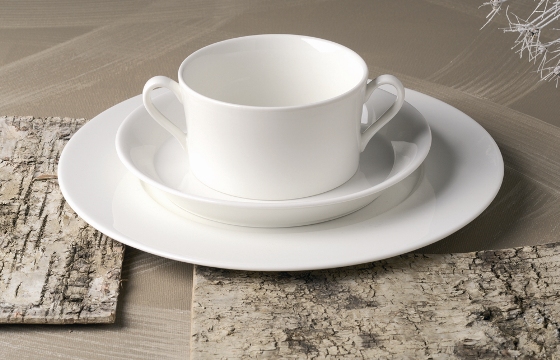
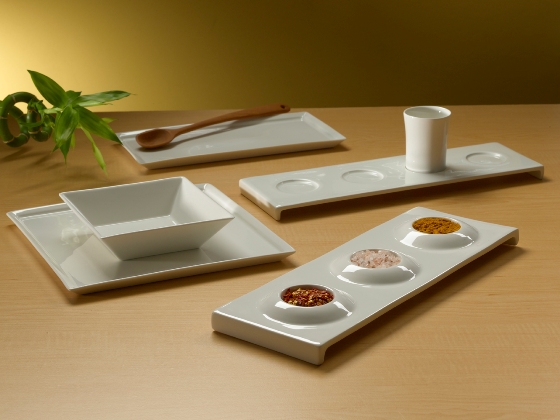
From simple stark white to geometric shapes to patterned tableware, the optional settings are endless.
Familiarize yourself with the many manufacturers, their collections, as well as capabilities in custom design. This will guide you in your search. Kenilworth, for example, offers European inspired looks with some collections revolving around unique shapes and sizes to make a stand-out statement, while others are more traditional.
Kenilworth Trading Company With a vision of becoming part of every fine dining experience in the United States, Kenilworth Trading Company stands for quality, tradition and style. The Kenilworth name evolved from the roots of the pottery culture in 1907—in Newell, West Virginia, a small American town where handcrafted pottery was, and still remains, a great source of pride and family tradition. Kenilworth products are made by the best craftsmen in the world to create premium ceramic tableware for the hotel and restaurant industries. For additional information about Kenilworth, please visit the company’s Web site at www.kenilworthllc.com or call 888-801-0531.